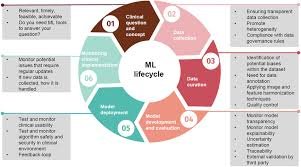
In 2025, as machine learning models power critical decisions in healthcare, finance, hiring, criminal justice, and autonomous systems, the question “Why did the model make this prediction?” is no longer optional—it’s a regulatory, ethical, and business requirement. Explainable AI (XAI) techniques help make black-box models more transparent, interpretable, and trustworthy.
This article explains what explainable AI is, why it matters in 2025, the most effective XAI methods available today, real-world examples, and practical steps to implement explainability in your machine learning projects.
Why Explainable AI Is Essential in 2025
- Regulatory compliance — The EU AI Act, U.S. Executive Order on AI, and emerging state laws require explainability for high-risk systems.
- Trust & adoption — Doctors, judges, loan officers, and end users need to understand and trust model decisions.
- Debugging & improvement — Explanations reveal biases, errors, and failure modes.
- Accountability — When models make mistakes, organizations must be able to explain and justify them.
- Fairness & bias mitigation — Explanations help detect and correct unfair outcomes.
Core Types of Explainability
| Type | Description | Best For |
|---|---|---|
| Intrinsic (built-in) | Models that are naturally interpretable (e.g., decision trees, linear models) | Low-stakes or regulatory use cases |
| Post-hoc | Techniques applied after training to explain any model | Complex deep learning models |
| Local | Explains individual predictions | Debugging single decisions |
| Global | Explains overall model behavior | Understanding general patterns |
Top Explainable AI Techniques & Tools in 2025
| Technique/Tool | Type | What It Does | Best For | Open-Source |
|---|---|---|---|---|
| SHAP (SHapley Additive exPlanations) | Post-hoc, local & global | Game-theoretic feature importance for any model | Most production use cases | Yes |
| LIME (Local Interpretable Model-agnostic Explanations) | Post-hoc, local | Approximates model locally with interpretable model | Debugging individual predictions | Yes |
| Integrated Gradients | Post-hoc, local | Attribution method for neural networks | Deep learning (especially vision) | Yes (Captum) |
| Partial Dependence Plots (PDP) & ICE | Global | Shows average effect of a feature on predictions | Understanding feature impact | Yes (scikit-learn, pdpbox) |
| Counterfactual Explanations | Post-hoc, local | “What would have changed the prediction?” | Fairness & user-friendly explanations | Yes (DiCE, Alibi) |
| Attention Visualization (Transformers) | Intrinsic | Highlights which tokens the model focused on | LLMs & vision transformers | Yes |
| Captum (PyTorch) | Post-hoc | Comprehensive attribution methods for PyTorch | Deep learning researchers | Yes |
| InterpretML (Microsoft) | Intrinsic & post-hoc | Glassbox models + explanations for black-box | Microsoft ecosystem | Yes |
| What-If Tool (Google) | Interactive | Visual exploration of model behavior | Model debugging & fairness testing | Yes |
| Alibi Explain | Post-hoc | Counterfactuals, contrastive explanations, trust scores | Fairness & compliance | Yes |
Real-World Examples of XAI in Action (2025)
- Healthcare — A major hospital uses SHAP to explain why a sepsis prediction model flagged a patient, showing doctors the key vital signs and lab values driving the alert. This increased physician trust and reduced alert fatigue.
- Credit Scoring — A fintech company applies counterfactual explanations to tell applicants, “If your debt-to-income ratio had been 5% lower, you would have been approved.”
- Hiring — A global employer uses LIME to audit resume-screening models and discovered that the model unfairly weighted certain universities—leading to a retraining process.
- Autonomous Driving — Waymo and Tesla use attention maps and integrated gradients to explain why a vehicle braked suddenly (e.g., “Model focused on pedestrian 80% of attention”).
Step-by-Step: How to Add Explainability to Your ML Project
- Choose the right level of explainability
- High-risk applications → Use multiple methods (SHAP + counterfactuals)
- Internal tools → Start with SHAP or LIME
- Incorporate explainability from the start
- Prefer interpretable models when possible (e.g., XGBoost, TabNet)
- Build explainability into your pipeline (e.g., log SHAP values for every prediction)
- Use production-ready tools
- SHAP + SHAPviz for dashboards
- Captum for PyTorch models
- Alibi for counterfactuals
- Present explanations to users
- Use visualizations (force plots, decision plots) rather than raw numbers
- Provide natural-language summaries (e.g., via GPT-4o or Claude)
- Monitor and audit
- Track explanation drift over time
- Conduct regular fairness audits using What-If Tool or Aequitas
Final Thoughts
In December 2025, explainable AI is no longer a nice-to-have—it’s a core requirement for trustworthy, compliant, and effective machine learning systems. Organizations that invest in XAI early gain a competitive advantage in trust, regulatory approval, and model performance.
Start simple: Add SHAP or LIME to your next model and visualize the results. You’ll quickly discover insights that improve both the model and stakeholder confidence.
Have you implemented explainability in your projects yet? Which technique has been most useful for you? Share your experience in the comments—I’d love to hear real-world applications!
About the Author